

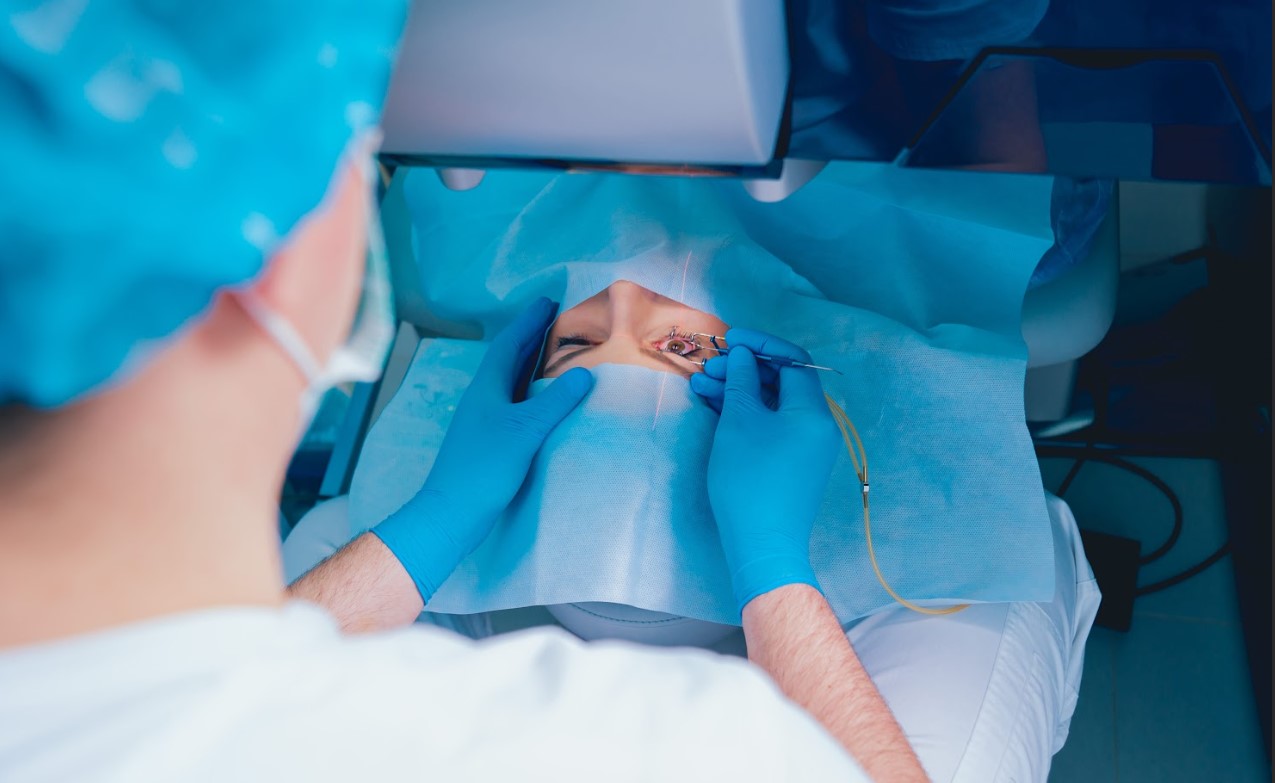
For many people, glasses and contact lenses are part of everyday life. While these solutions effectively correct vision, some patients prefer a more permanent option that reduces or eliminates dependence on corrective lenses.
In recent years, refractive surgery has become increasingly popular as technology continues to improve the safety and precision of vision correction procedures. Modern techniques allow ophthalmologists to correct common vision problems while offering relatively quick recovery times.
Understanding the different refractive surgery options available can help patients decide whether surgical vision correction is suitable for their needs.`
What Is Refractive Surgery?
Refractive surgery refers to procedures that correct vision by changing how light is focused within the eye.
Definition and goal
The goal of refractive surgery is to improve visual clarity by adjusting the eye’s focusing ability. This is usually achieved by reshaping the cornea or replacing the natural lens of the eye.
By improving how light reaches the retina, these procedures can reduce or eliminate the need for glasses or contact lenses.
Common vision problems it addresses
Refractive surgery is commonly used to treat:
- Myopia (short-sightedness)
- Hyperopia (long-sightedness)
- Astigmatism
- Presbyopia
Different procedures are designed to address different visual needs, which is why a personalised evaluation is necessary before treatment.
Importance of personalised assessment
Not every patient is suitable for every procedure. Factors such as age, corneal thickness, eye health, and lifestyle all influence which refractive surgery option may be most appropriate.
A comprehensive eye examination helps determine whether surgery is suitable and which procedure may offer the best outcome.
LASIK: How It Works and Who It Suits
LASIK is one of the most widely performed forms of refractive surgery worldwide.
Procedure overview
During LASIK surgery:
- A thin flap is created on the surface of the cornea.
- A laser reshapes the underlying corneal tissue.
- The flap is repositioned to allow the eye to heal naturally.
The reshaping process helps light focus more accurately on the retina.
Ideal candidates
LASIK may be suitable for patients who:
- Have stable vision prescriptions
- Have sufficient corneal thickness
- Do not have significant eye surface conditions
- Wish to reduce dependence on glasses or contact lenses
Key benefits and limitations
Benefits may include:
- Rapid visual improvement
- Short procedure time
- High success rates for many patients
Potential limitations include:
- Not suitable for very thin corneas
- Some patients may experience temporary dry eyes
- Vision may still change gradually with age
Typical recovery timeline
Most patients notice improved vision within 24 to 48 hours after LASIK. Many can resume normal activities within a few days, although full stabilisation may take several weeks.
SMILE: Key Differences and Benefits
SMILE (Small Incision Lenticule Extraction) is a newer type of laser refractive surgery designed to treat myopia and astigmatism.
How SMILE differs from LASIK
Unlike LASIK, SMILE does not require the creation of a corneal flap. Instead, the laser creates a small lens-shaped piece of tissue within the cornea, which is then removed through a tiny incision.
Because the procedure involves a smaller incision, it is considered a minimally invasive technique.
Suitable patient profiles
SMILE may be suitable for patients who:
- Have myopia or myopia with astigmatism
- Prefer a flap-free procedure
- Lead active lifestyles or participate in contact sports
Advantages for active lifestyles and dry-eye concerns
Some patients prefer SMILE because:
- It preserves more corneal structure
- It may reduce the risk of flap-related complications
- It may be associated with fewer dry-eye symptoms in some cases
Recovery expectations
Vision improvement is usually noticeable within a few days. Most patients return to daily activities relatively quickly, although full visual stability may take a few weeks.
Clear Lens Extraction (CLE): When It’s Recommended
Clear Lens Extraction (CLE) is another form of refractive surgery that involves replacing the eye’s natural lens.
What CLE involves
During CLE, the natural lens of the eye is removed and replaced with an artificial intraocular lens (IOL), similar to the procedure performed in cataract surgery.
The artificial lens is selected to correct refractive errors and improve visual clarity.
How it differs from laser procedures
Unlike LASIK or SMILE, CLE does not reshape the cornea. Instead, it changes the eye’s focusing ability by replacing the lens itself.
Who benefits most
CLE may be recommended for patients who:
- Have presbyopia and require reading correction
- Have very high refractive errors
- Are not suitable candidates for laser vision correction
- May be at risk of developing cataracts later in life
Long-term vision correction advantages
Because the natural lens is replaced, CLE can provide long-term correction and also eliminates the possibility of future cataract development in the treated eye.
Comparing Procedures: Safety, Recovery, and Suitability
Each refractive surgery option has different advantages depending on the patient’s vision needs.
LASIK
- Suitable for many refractive errors
- Fast recovery
- Requires adequate corneal thickness
SMILE
- Minimally invasive with no corneal flap
- Often suitable for active individuals
- Typically used for myopia and astigmatism
Clear Lens Extraction
- Suitable for higher refractive errors or presbyopia
- Involves lens replacement rather than corneal reshaping
- May provide long-term correction for ageing eyes
When comparing procedures, doctors consider several factors:
- Age
- Lifestyle and occupation
- Eye health and corneal structure
- Long-term visual goals
Modern refractive surgery procedures generally have high safety and success rates when performed on appropriate candidates after thorough assessment.
How Candidacy Is Assessed
Before recommending refractive surgery, an ophthalmologist performs a comprehensive eye examination.
Comprehensive eye examination
This evaluation helps determine whether surgery is safe and suitable for your eyes.
Corneal thickness, eye health, and lifestyle evaluation
Several factors are assessed, including:
- Corneal thickness and shape
- Stability of vision prescription
- Presence of dry eye or other eye conditions
- Overall eye health
- Daily lifestyle and visual needs
Why not everyone is suitable for every procedure
Some patients may not be suitable candidates for certain procedures due to corneal structure, medical history, or existing eye conditions. In these cases, alternative treatment options may be recommended.
Next Steps: Consultation and Personalised Advice
Choosing refractive surgery is an important decision that should be based on professional guidance and a clear understanding of available options.
Importance of professional guidance
A qualified Singapore ophthalmologist can explain the benefits and limitations of each procedure and help determine which option aligns best with your vision needs.
Setting realistic expectations
While refractive surgery can significantly improve vision, it is important to have realistic expectations about outcomes, recovery time, and the possibility of future vision changes due to ageing.
Encouraging informed consultation
At International Eye Clinic, we conduct a detailed eye examination in Singapore to determine whether refractive surgery is suitable and which procedure may provide the best results for each patient. If you are considering vision correction surgery or would like to explore your options, arrange a consultation with us now.
